Through the surface
Porous materials contain connected spaces that allow water to pass through. Resin-bound surfacing is one example.

A driveway should look right for your home and have a clear plan for rainwater. Explore the surfaces, groundwork and practical choices that make the difference.
Driveway installation across Glasgow and Central Scotland.
Arrange a Site Visit ↗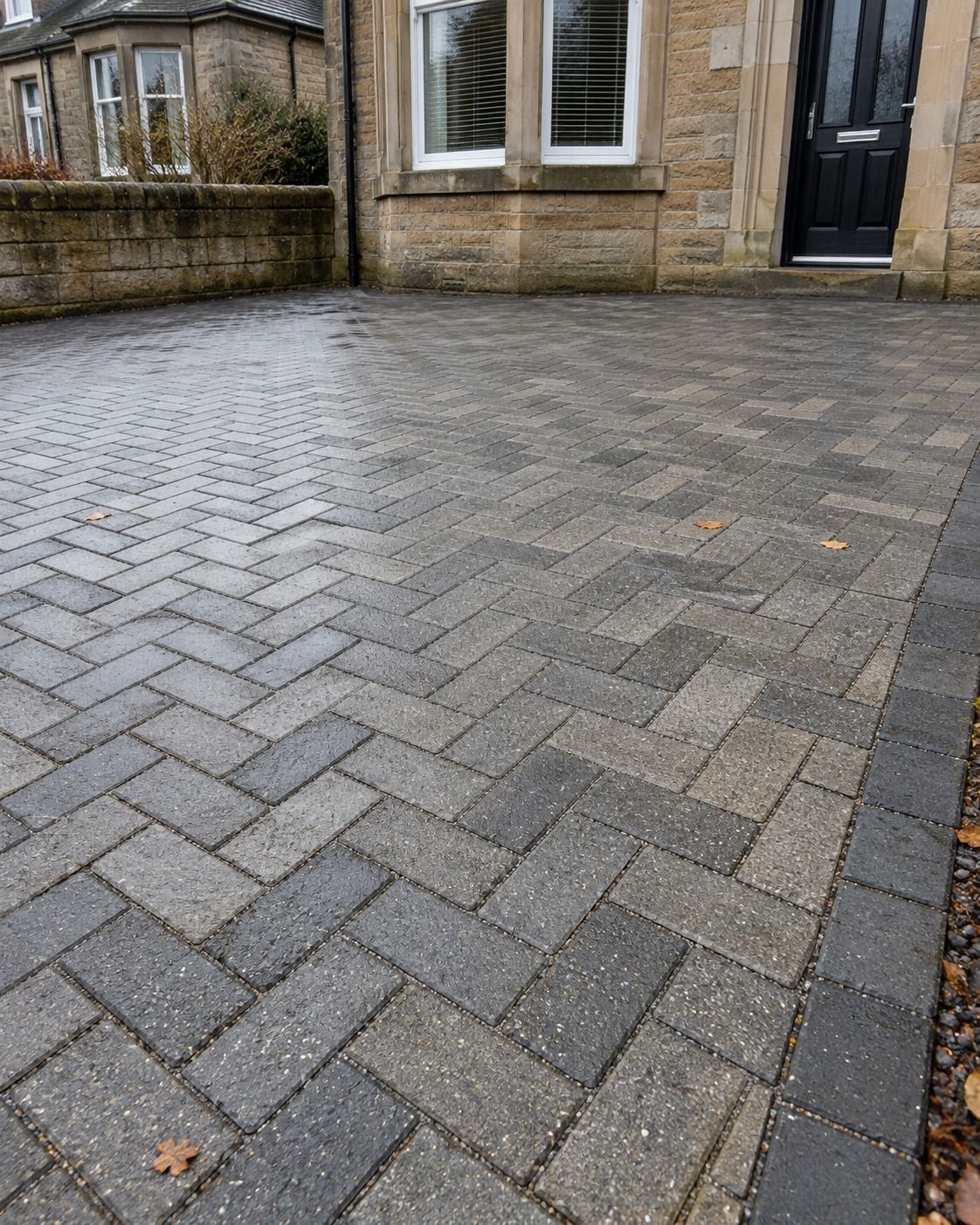
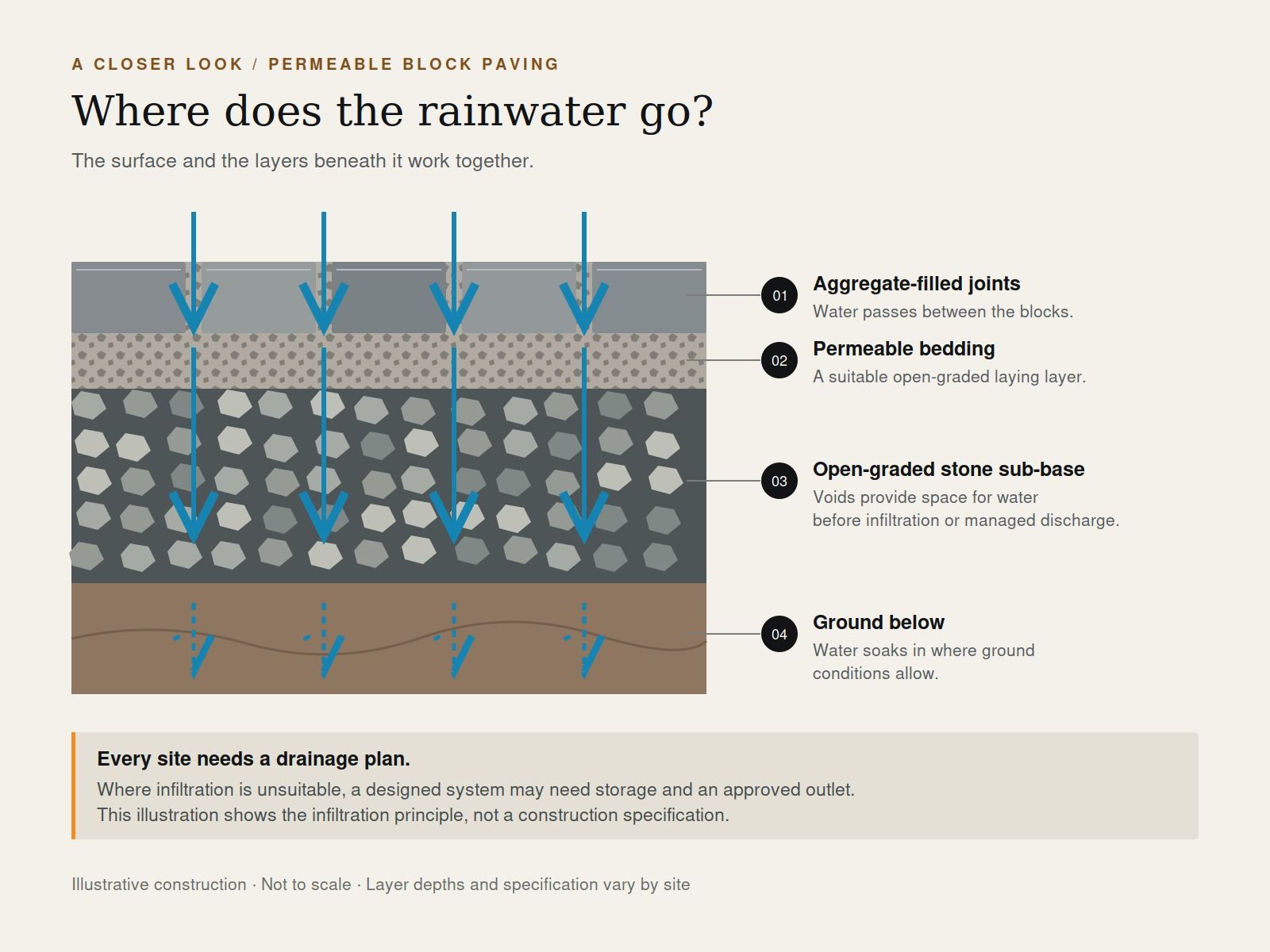
A permeable driveway lets rainwater pass through its surface or specially designed joints into the layers below. From there, water can soak into suitable ground or be managed through a designed drainage outlet.
Porous materials contain connected spaces that allow water to pass through. Resin-bound surfacing is one example.
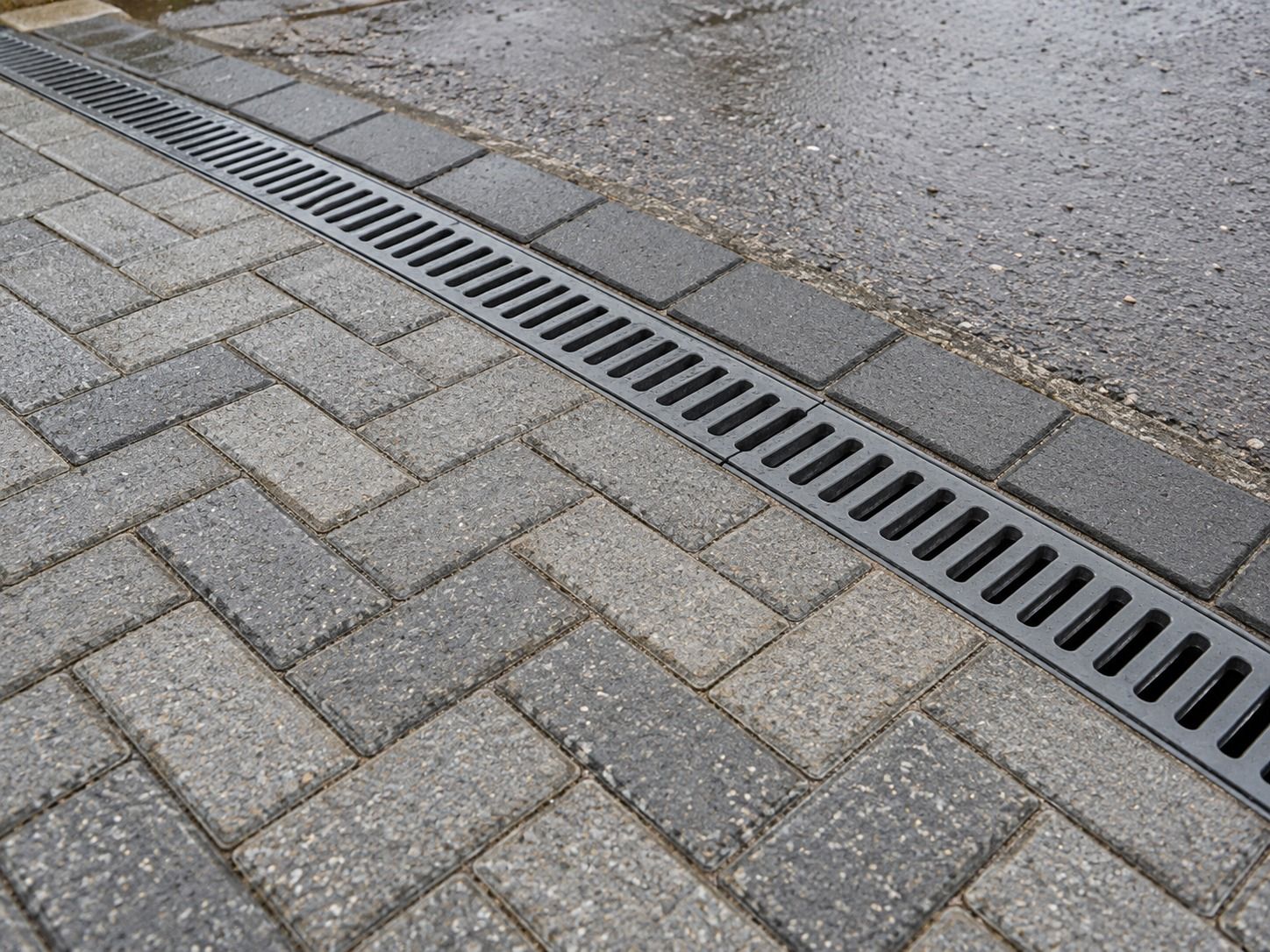
Permeable block paving uses purpose-designed joints and suitable aggregate to carry water into the construction below.
The surface, base and drainage route need to work together. A porous finish alone does not establish how the driveway will drain.
Before choosing a colour or pattern, consider where the rainwater will go. The ground’s ability to absorb water, the driveway’s slope and its relationship to the house all affect the design.
A suitable construction may provide space to hold water temporarily before it infiltrates or leaves through a controlled outlet. The right arrangement is specific to the site.
Start with the appearance and how you use the driveway, then check the complete construction needed. These are common options to discuss; suitability and availability should be confirmed for your project.
| Surface | Appearance & use | What to check |
|---|---|---|
| Resin-bound aggregate | A continuous stone finish with a broad choice of blends. | A compatible base and a designed water route. Resin-bound and resin-bonded are different systems. |
| Permeable block paving | Defined patterns, borders and individual replaceable units. | Purpose-designed permeable blocks, correct joint aggregate and suitable layers below. |
| Gravel or gravel grids | A loose-stone appearance, with grids available to help contain the gravel. | Ground preparation, slope, stone movement and suitability for wheels and everyday access. |
| Porous asphalt or concrete | A more functional finish using a specifically porous specification. | Specialist design and installation. Standard tarmac and concrete should not be assumed permeable. |
On mobile, swipe the comparison sideways to see all three columns.
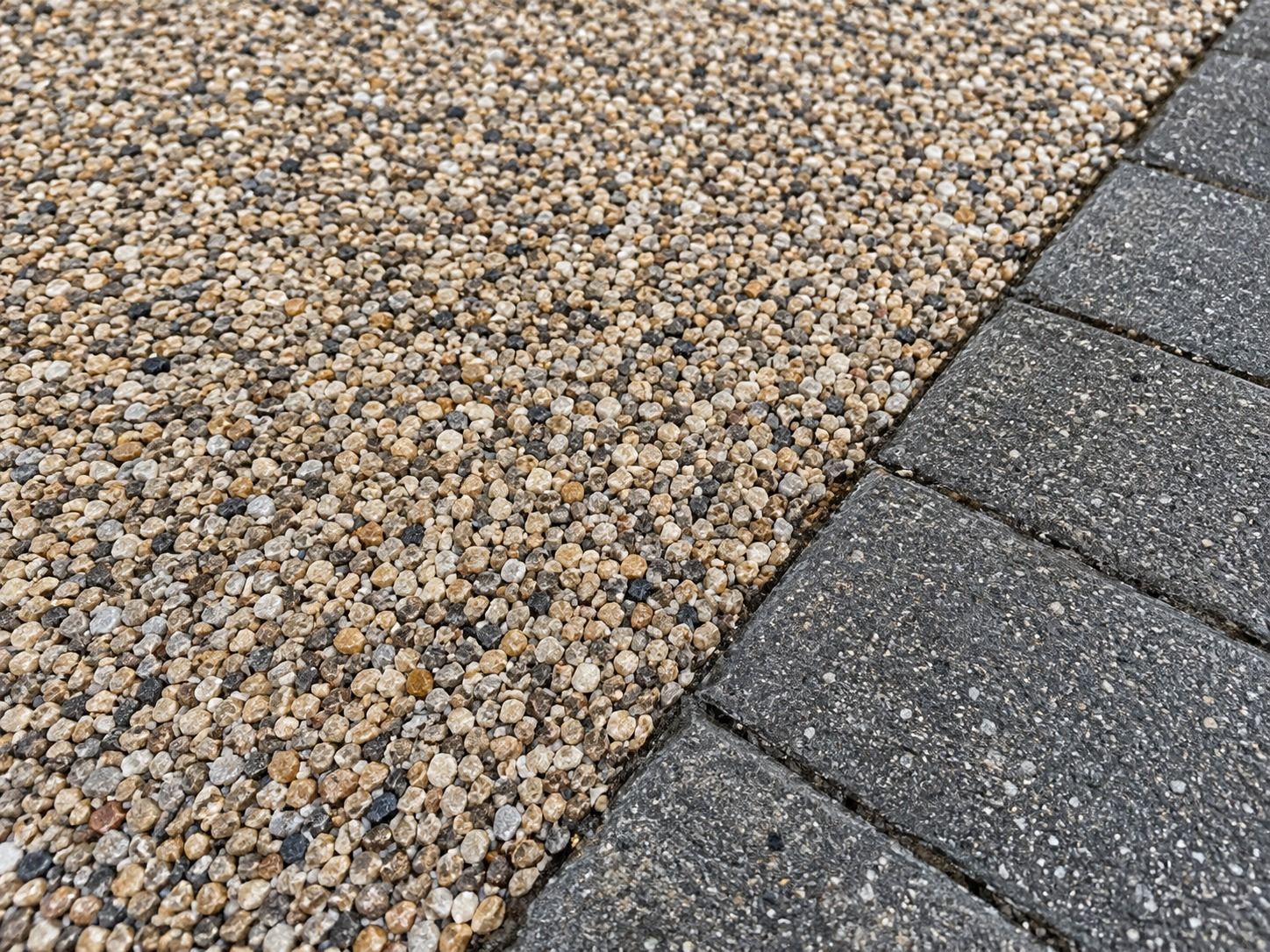
Resin-bound surfacing combines aggregate and resin before laying. Its open structure can allow rainwater through the finish, making it a useful option within a properly designed permeable system.
Putting that surface over an impermeable base does not make the whole build permeable. Existing bases need assessment, and the water still needs somewhere suitable to go.
Resin-bonded surfacing uses a different application method and should not be treated as an equivalent permeable solution.
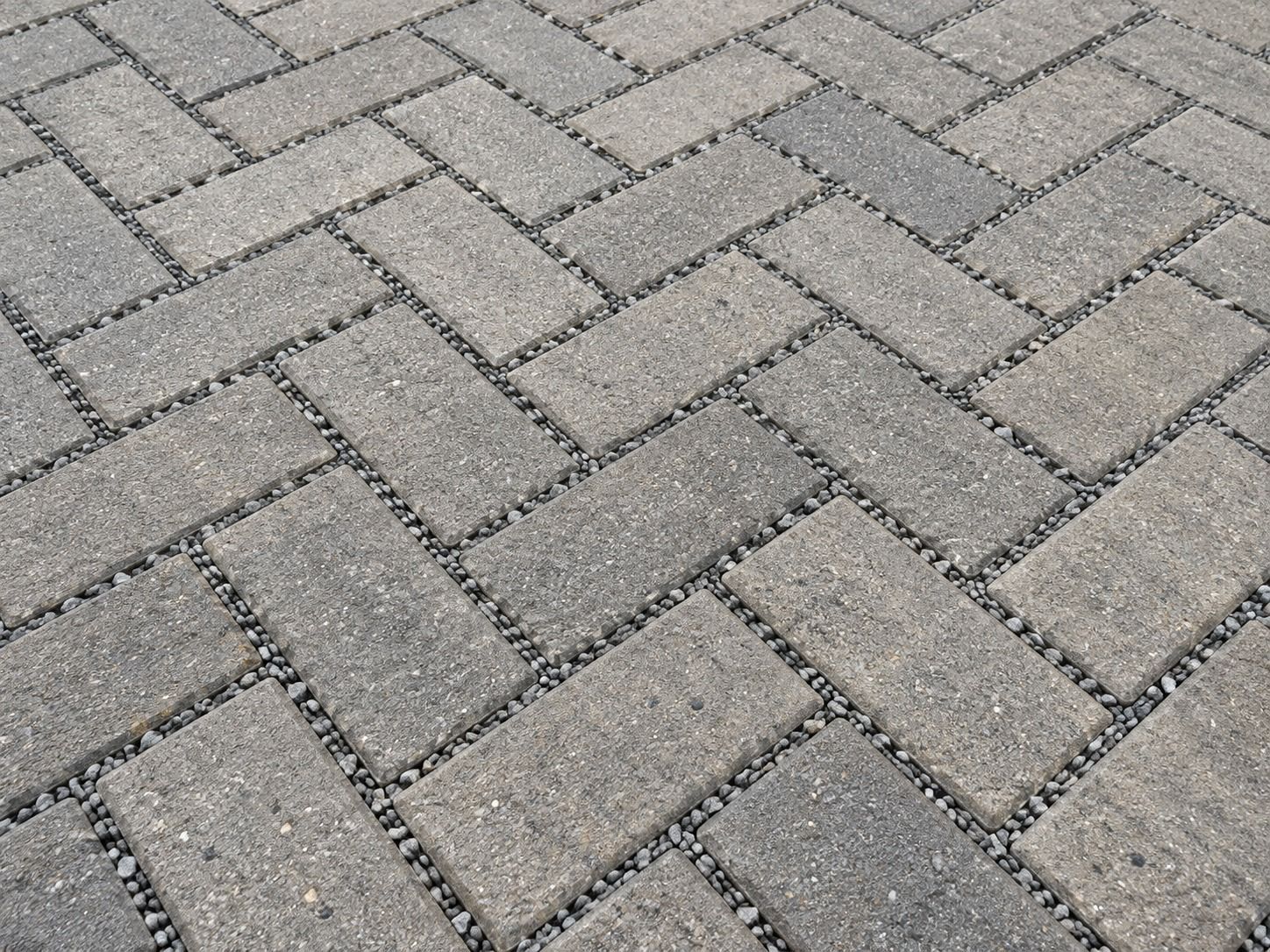
Permeable block paving offers the pattern and definition of a paved driveway while allowing rainwater to move through the joints.
The correct jointing material and open-graded supporting layers are part of the system. Ordinary monoblock paving does not automatically become permeable simply because it has joints.
Choose the finish alongside the drainage specification, and ask which permeable product and construction are proposed.
The surface is only one part of the price. Excavation, disposal, the base construction, drainage and access can all change the total.
Ask for a written quotation that explains the proposed build and what is included. A finish-only price and a complete rebuild are very different scopes of work.
In Scotland, permitted-development rules for hard surfaces between a house and a road include a condition about using porous materials or directing runoff to a porous area within the property.
That does not mean every permeable driveway is automatically exempt from permission. Designations, site circumstances and changes to road access can affect the approvals needed. Elsewhere in the UK, check the guidance for your nation and local authority.
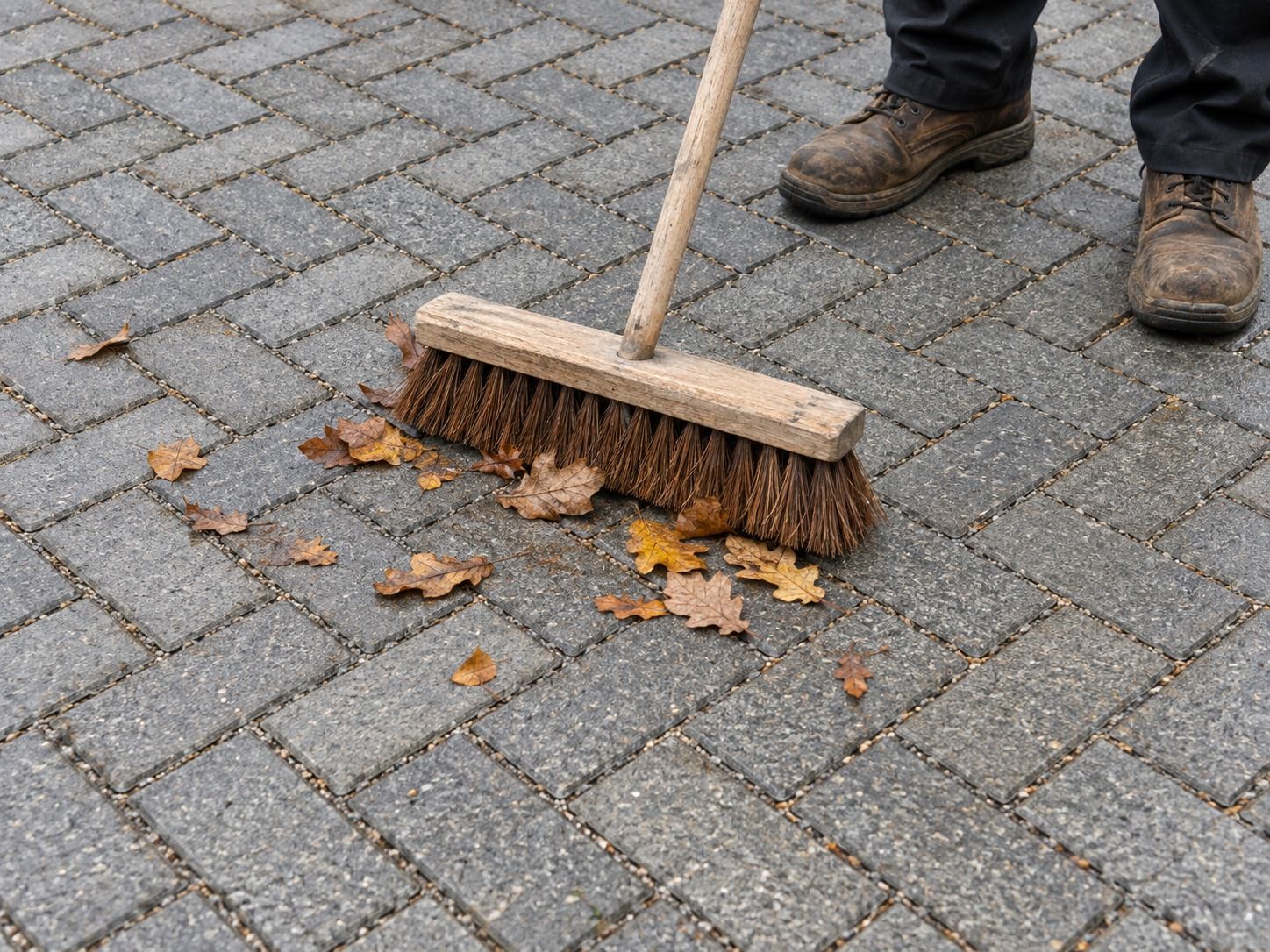
Permeable does not mean maintenance-free. Leaves, soil and other debris can gradually affect the surface or joints.
No. Resin-bound surfacing can be porous, but the base and drainage design determine the performance of the complete installation. Resin-bonded surfacing is a different system and should not be assumed permeable.
Not necessarily. A permeable paving system requires the appropriate blocks, joint material and supporting construction. Standard sand-jointed paving should not be described as a permeable system without checking its specification.
It may be possible, but slow-draining ground changes the design. Assessment is needed to establish whether infiltration is suitable or whether water storage and an appropriate outlet are required.
Sometimes, if the existing base is structurally suitable and compatible with the proposed system. An overlay does not resolve a failed base or automatically create a permeable construction.
It can help manage rainfall as part of a suitable drainage design. It cannot guarantee protection against flooding, which can also depend on ground saturation, rainfall intensity and water arriving from elsewhere.
SuDS means sustainable drainage systems. Permeable paving can form part of a SuDS approach, but the surface label alone does not establish compliance. The complete design and applicable requirements need to be considered.
That depends on ground conditions, drainage, access, appearance, budget and maintenance. Compare suitable complete systems after a site assessment, rather than selecting on colour or surface price alone.
Pear Landscaping Group provides driveway installation across Glasgow and Central Scotland. Contact the team with your postcode and a few details about the project to discuss a site visit.
Tell us where you are, what you would like to change and any drainage concerns. We can discuss your driveway project and the next steps for a site visit across Glasgow and Central Scotland.
Arrange a Site Visit ↗Prefer to talk? 0800 599 9011